


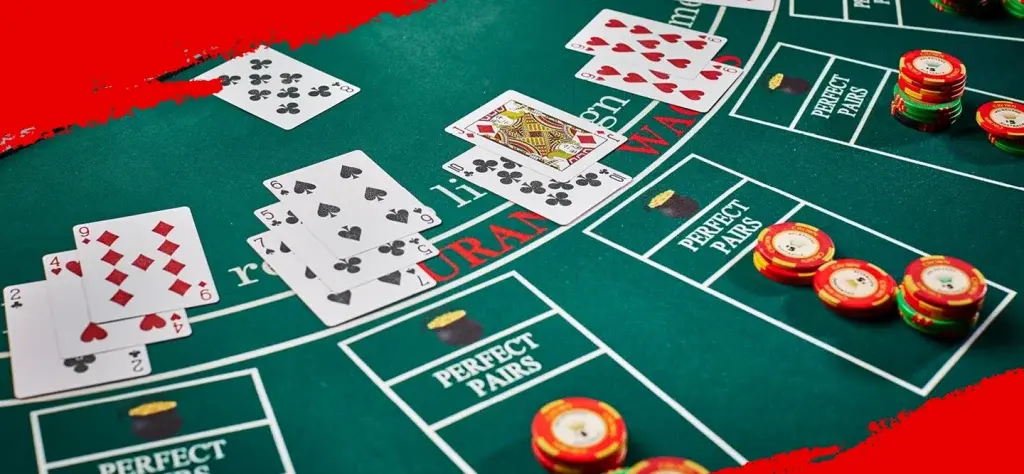
Blackjack is one of the few casino games where skill genuinely matters. Unlike slot machines or roulette, your decisions at the table directly influence the house edge. By learning and consistently applying basic blackjack strategy, players can reduce the casino’s advantage to nearly 0.5%, giving themselves the best possible chance to win over time.
This guide breaks down blackjack strategy in a clear, practical way—no fluff, no myths, just proven logic used by professionals and casual players alike.
What Is Basic Blackjack Strategy?
Basic blackjack strategy is a mathematically proven set of decisions that tells you the best move for every possible hand combination. These decisions are based on millions of simulated hands and assume the dealer follows standard casino rules.
The strategy focuses on:
-
Your hand total
-
The dealer’s visible card
-
Long-term expected value, not short-term luck
When used correctly, it minimizes losses and maximizes winning potential over thousands of hands.
Understanding the Goal in Blackjack
The objective is simple: beat the dealer without exceeding 21. You are not competing against other players at the table. Every decision should be based solely on your cards and the dealer’s upcard.
Key concepts to remember:
-
The dealer must follow fixed rules
-
You act first, which creates risk
-
Smart decisions reduce bust probability
Core Blackjack Decisions Explained
When to Hit
You should hit when standing puts you at a high risk of losing and drawing another card gives you a statistically better outcome.
General guidelines:
-
Hit on hard totals of 8 or less
-
Hit on 12–16 when the dealer shows 7 or higher
-
Hit on soft hands (hands with an Ace counted as 11) until reaching a strong total
When to Stand
Standing is best when your hand is strong enough and hitting would increase the chance of busting.
Stand when:
-
You have 17 or higher
-
You hold 12–16 and the dealer shows 2–6
-
You have a soft 19 or higher
This strategy relies on the dealer’s higher likelihood of busting with weak upcards.
When to Double Down
Doubling down allows you to double your bet in exchange for committing to one final card. This move is powerful when the odds are in your favor.
Double down when:
-
You have 11 against any dealer card except Ace
-
You have 10 against dealer 2–9
-
You have 9 against dealer 3–6
-
You hold soft 13–18 against dealer 4–6
This is one of the strongest profit-generating moves in blackjack.
When to Split Pairs
Splitting can either improve or ruin a hand depending on the pair.
Always split:
-
Aces
-
8s
Never split:
-
10s
-
5s
Conditional splits:
-
Split 2s, 3s, and 7s against dealer 2–7
-
Split 6s against dealer 2–6
-
Split 9s against dealer 2–6 and 8–9 (not against 7, 10, or Ace)
The Importance of Soft vs Hard Hands
A soft hand includes an Ace counted as 11, giving flexibility without busting risk. A hard hand lacks that safety net.
Why this matters:
-
Soft hands encourage aggressive play
-
Hard hands require defensive decisions
-
Strategy differs dramatically between the two
Understanding this distinction is essential for consistent performance.
Dealer Upcard: Why It Changes Everything
The dealer’s visible card heavily influences your decision-making.
Weak dealer cards:
-
2 through 6
-
Dealer has a higher chance to bust
-
You should play more conservatively
Strong dealer cards:
-
7 through Ace
-
Dealer is more likely to make a strong hand
-
You must take calculated risks to compete
House Rules That Affect Strategy
Blackjack rules vary slightly between casinos, and these differences impact your odds.
Rules that favor players:
-
Dealer stands on soft 17
-
Doubling after splitting allowed
-
Late surrender available
-
Fewer decks in play
Before playing, always check table rules to adjust expectations.
Common Blackjack Mistakes to Avoid
Many players lose money by ignoring proven strategy.
Avoid these habits:
-
Playing based on gut feeling
-
Chasing losses with bigger bets
-
Taking insurance (statistically unfavorable)
-
Deviating from strategy due to short-term outcomes
Blackjack rewards discipline, not emotion.
Why Consistency Beats Luck
Short-term luck can swing wildly, but blackjack is a long-term probability game. The real advantage comes from making the right decision every single time, even when the outcome feels unlucky.
Players who stick to basic strategy:
-
Lose less during downswings
-
Win more during positive runs
-
Maintain bankroll longer
FAQs
What is the house edge when using basic blackjack strategy?
When played correctly, basic strategy reduces the house edge to around 0.5%, depending on table rules.
Is card counting better than basic strategy?
Card counting builds on basic strategy but requires skill, focus, and favorable rules. Basic strategy is essential even for card counters.
Should beginners memorize a blackjack strategy chart?
Yes. Strategy charts provide instant guidance and are the fastest way to improve decision-making accuracy.
Does basic strategy guarantee profits?
No strategy guarantees profits. It simply maximizes your odds and minimizes losses over time.
Is online blackjack strategy the same as casino blackjack?
Yes, as long as the rules are identical. Always confirm deck count and dealer behavior.
Why is taking insurance a bad idea?
Insurance carries a high house edge and favors the casino in the long run.
Can basic strategy be used in live dealer blackjack?
Absolutely. Live dealer games follow the same probabilities and benefit equally from proper strategy.
